
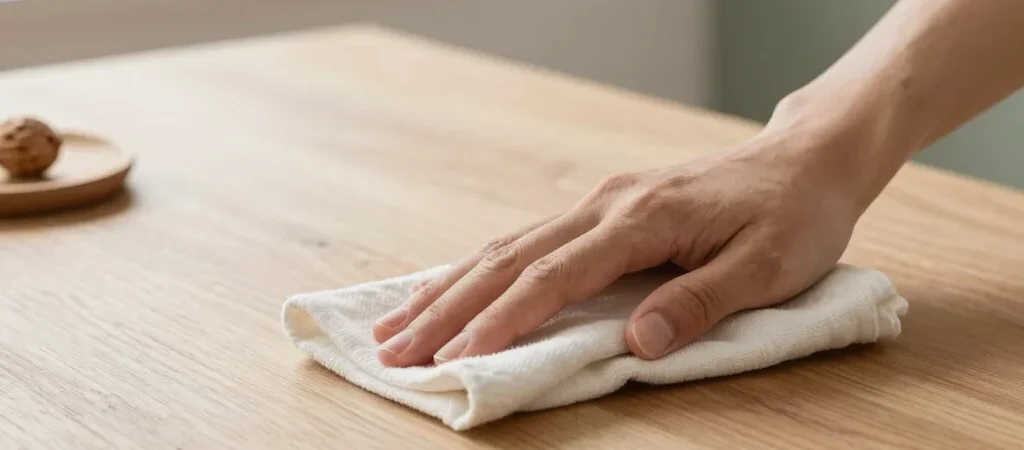
When a wooden surface looks dull or sticky, adding polish or scrubbing harder can make the problem worse. Dust first, then identify the finish or consult the maker’s care guidance if it is available. Wood species matters, but the surface coating usually determines which cleaning method is appropriate.
Begin with gentle cleaning
For routine dust, use a clean, soft cloth rather than one carrying grit from another surface. If the finish’s instructions allow damp cleaning, wring the cloth well and dry the area promptly; standing water can seep into joints or damage a vulnerable finish. Avoid treating a quick test spot as proof that an unknown cleaner is safe everywhere.
Find out what protects it
A clear film finish and an oil-treated surface do not call for the same products or renewal schedule. Wax, silicone-containing polish, abrasive pads, and strong household cleaners can leave residue or interfere with later refinishing, so do not reach for them by default. When the finish is unknown, check labels, existing care notes, or ask a furniture professional before applying anything beyond gentle dusting.
Protect against repeat damage
Use coasters under cold drinks and wipe spills before they sit; felt pads beneath objects help limit scratches when pieces move. Keep solid wood furniture away from persistent dampness and intense direct sun, which can affect the surface over time. For a stubborn mark, identify its likely cause and the finish first—then choose a repair method that does not require removing more material than necessary.