
Wooden Furniture
Choosing solid wood furniture that lasts
Species density, joinery, and everyday use decide how a table, chair, or cabinet performs over decades. This guide explains what to check before you buy.
Selection criteria
Tables, seating, and storage
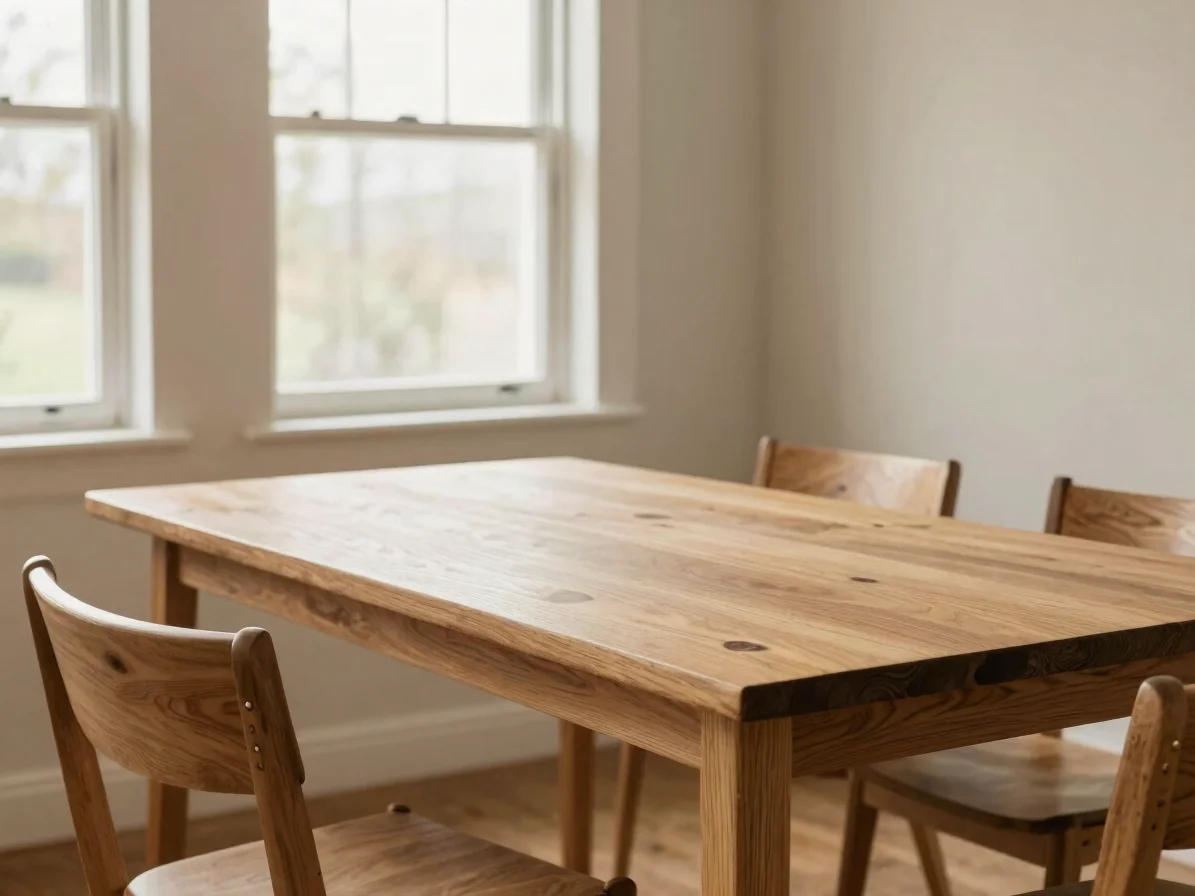
Dining tables
Check the top and the legs
Solid hardwood tops move with humidity, so look for stable panel construction. Dense species such as oak resist dents, while leg joints should show a clean mortise and tenon fit.
Seating
Judge comfort by proportion
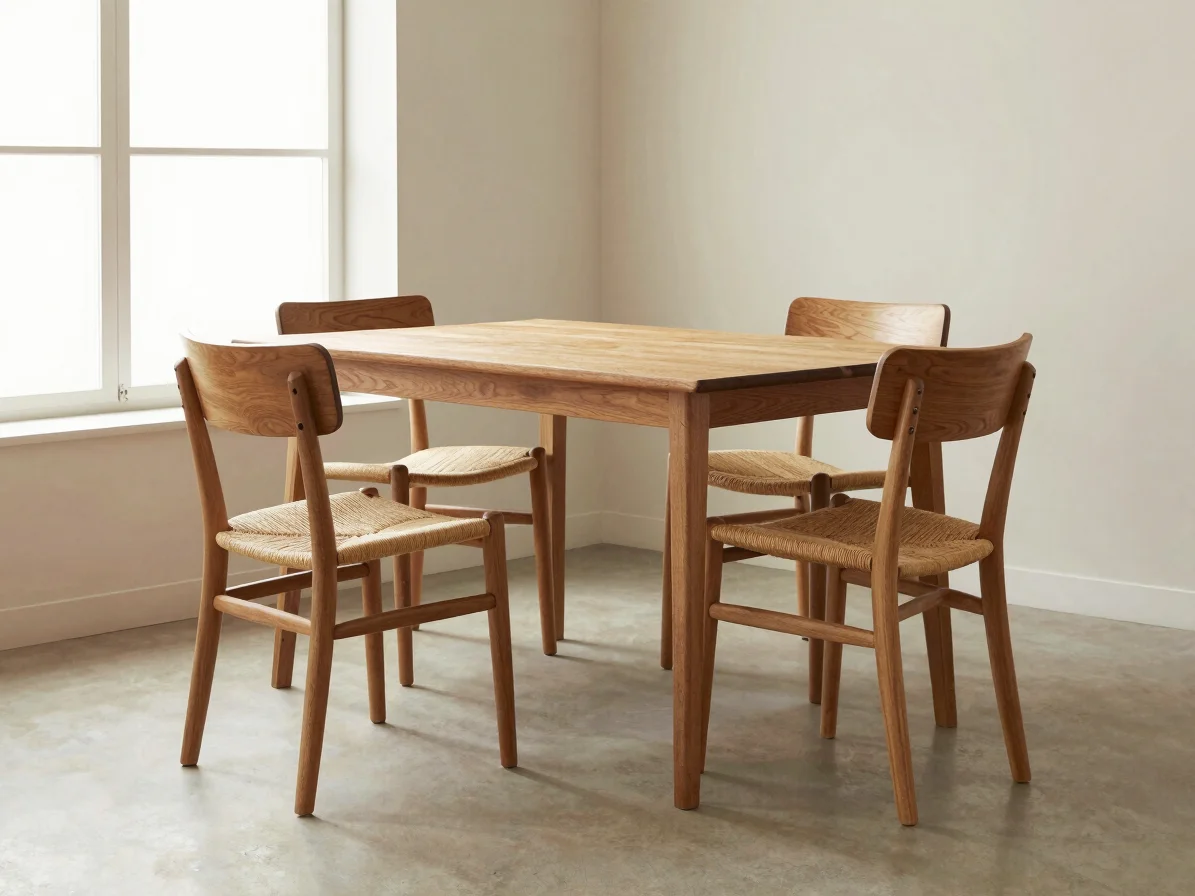
A chair seat should suit the sitter's height, and the back should support the lumbar curve. Hardwood frames tolerate repeated use well when the rails and stretchers are joined rather than fixed with fasteners alone.
Storage
Plan for scale and access
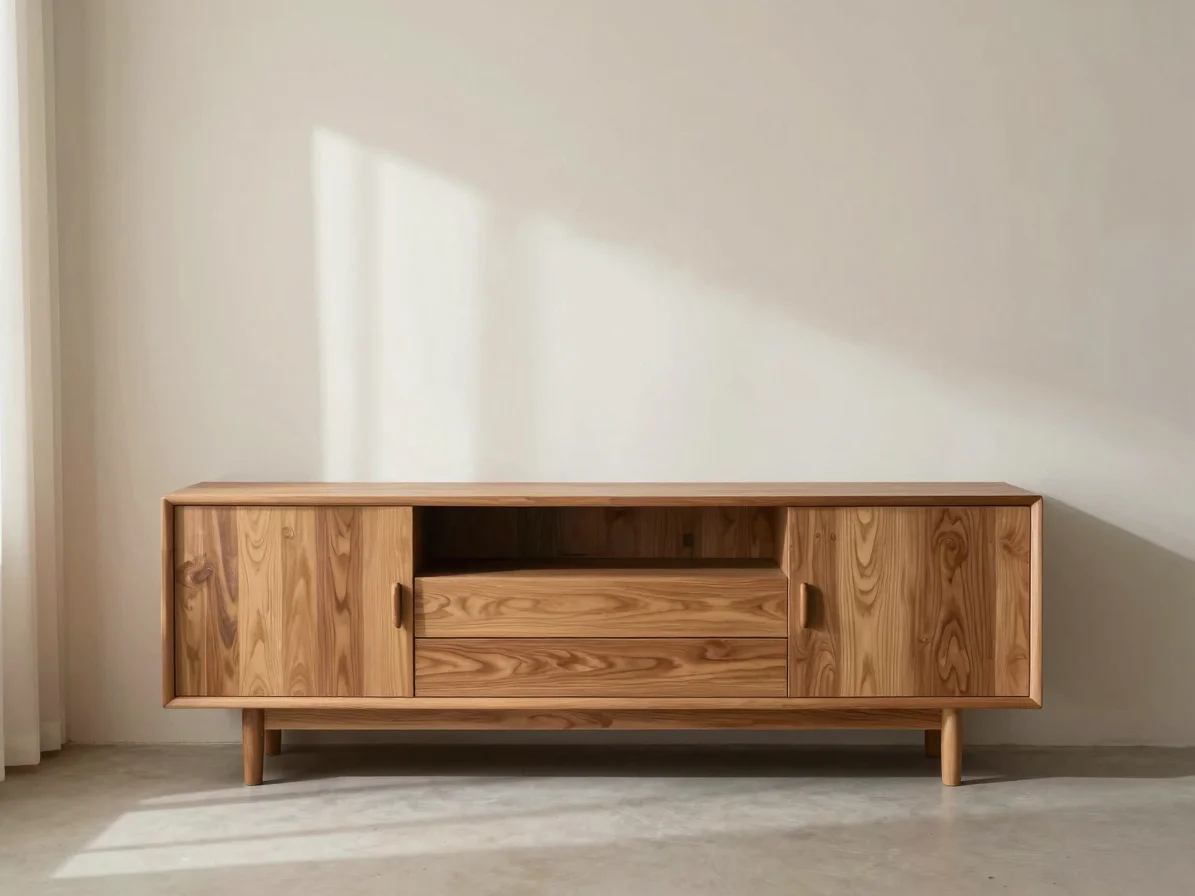
Measure the wall and the walking clearance before choosing a credenza or sideboard. Drawers and doors should open fully without striking nearby furniture, and shelves should be sized to carry their contents.
Joinery and repairability
Judge the joints before the finish
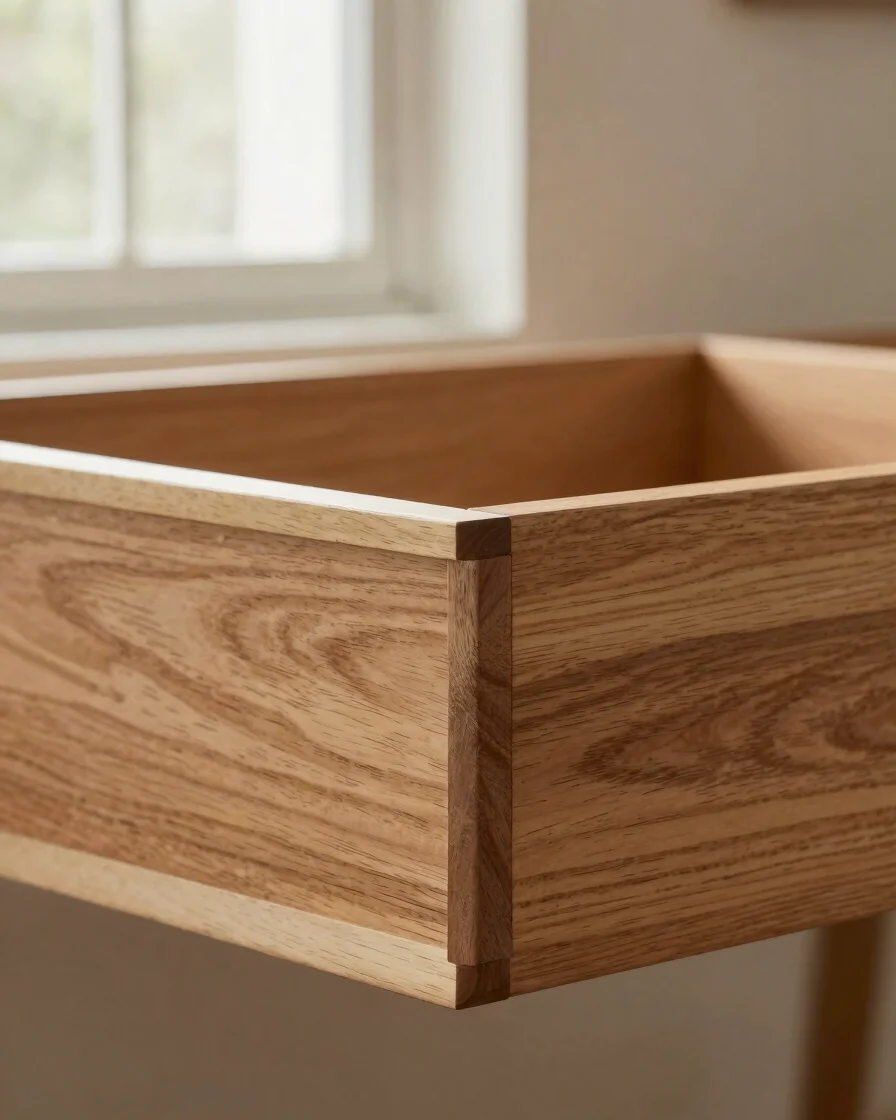
Traditional joinery, such as mortise and tenon or dovetail construction, lets a piece move with the seasons and be taken apart for repair. Check that drawers run on wood runners and that legs stay tight when the frame is pressed gently.
Weight distribution matters too: a heavy top on slender legs needs well-placed braces. Legacy pieces with solid frames are usually worth restoring, while glued veneer can often be reconditioned only with care.