
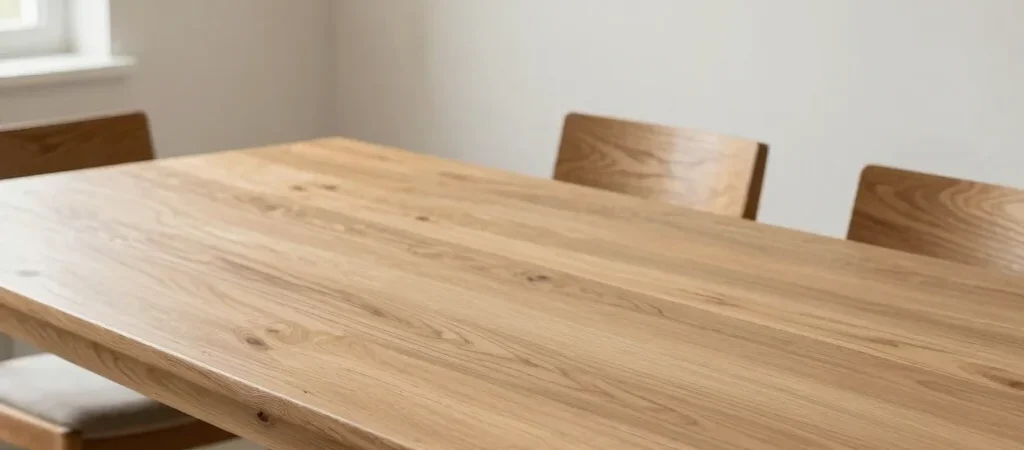
A pale oak table can feel quiet in a bright dining room; the same table can look much busier when its grain runs across a small space. Start your choice with the table’s daily work—family meals, occasional dinners, or a desk between uses—then look at species and finish. Appearance matters, but the surface is part of the decision too.
Read the grain in context
Oak often has a pronounced, open grain that remains visible beneath many clear finishes. Walnut typically brings a deeper brown tone and a distinct grain pattern, while maple tends to read more evenly and lightly. These are broad tendencies, not guarantees: boards vary, and stain can change the color substantially.
Match the surface to daily use
A dining surface will meet plates, cups, crumbs, and the occasional damp ring, so ask what finish is on the table and how it should be maintained. A film-forming finish can create a more continuous protective layer, while oil finishes generally leave the wood’s texture more apparent and may call for periodic attention. Neither is maintenance-free, and the care instructions depend on the specific finish.
Look beyond the tabletop
Check the underside and edges for construction details, and find out whether the table is solid wood, veneer, or a combination. Veneer is a real wood surface over a supporting core, not a lesser version of solid wood, but deep sanding can damage it. Before choosing, picture the table alongside your floor and nearby cabinetry in the room’s actual daylight.